
Devinder Singh Gill: From Entrepreneurial Beginnings to a Greener Energy Future
Every entrepreneurial journey begins with an idea. For Devinder Singh Gill, that journey began at a young age and gradually expanded across real estate, international business, public service, education, and now renewable energy.
His latest association with Keystone Green Energy represents another chapter in that journey. This time, the focus is on sustainable infrastructure and the future of clean energy through Bio-CNG.
From Early Ambition to Business Leadership
Devinder Singh Gill began his professional journey in real estate at the age of 23. His early work focused on development opportunities in the Mohali and Tricity region.
Over time, his business vision expanded beyond the local market. His journey included international business interests across markets such as Dubai, Canada, and Australia.
Working across different markets requires adaptability. It also requires an understanding of changing customer expectations and business environments.
These experiences helped shape a broader entrepreneurial outlook.
For Gill, business has not been limited to one sector. His professional journey has continued to evolve with new opportunities and changing market needs.
A Journey Beyond Business
An important part of Devinder Singh Gill’s journey has also involved public service and administration.
His experience as an Officer on Special Duty added a different dimension to his professional career. It provided exposure to public administration, urban development, infrastructure, and government processes.
His association with education further expanded this journey.
Education represents a different kind of investment. It focuses on creating opportunities for people and developing skills for the future.
Through his involvement in educational initiatives, his journey has reflected an interest in combining professional success with broader social contribution.
These different experiences now provide context for his move toward sustainable energy.
The Next Chapter: Keystone Green Energy
The renewable energy sector is becoming increasingly important as businesses and governments explore cleaner energy solutions.
This is where Keystone Green Energy enters the story.
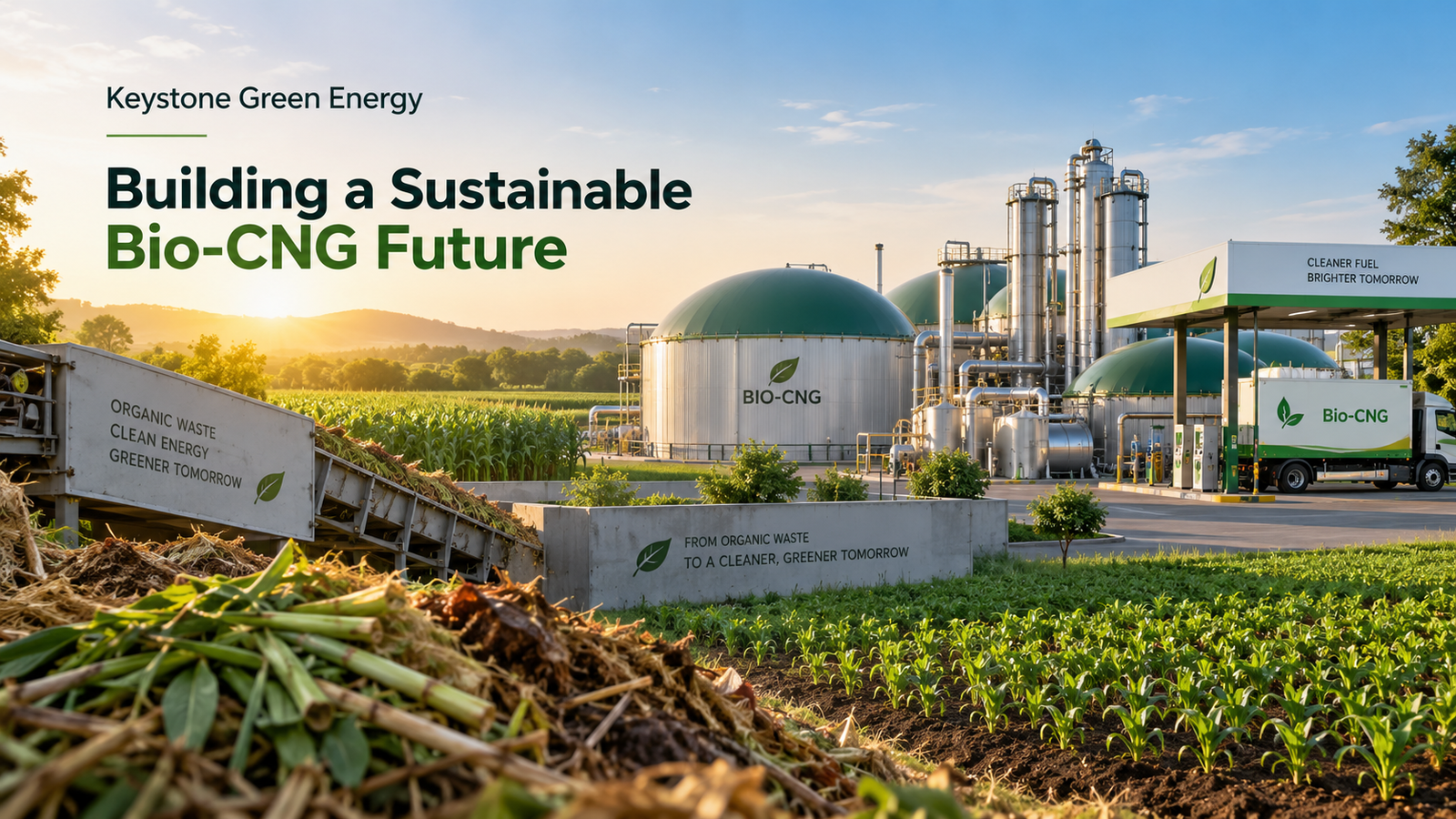
The company is developing a vision around Bio-CNG, a renewable fuel produced from organic waste.
The proposed project is a 5 TPD Bio-CNG plant. It is designed to process approximately 12 to 15 tonnes of organic biomass every day.
The proposed facility can produce around 2,500 to 3,500 kilograms of Bio-CNG per day.
It is also designed to generate approximately 10 to 12 tonnes of organic bio-fertilizer each day.
This creates an interesting connection between waste management, clean energy, and agriculture.
Turning Waste Into Energy
At the heart of the Keystone Green Energy concept is a circular approach.
Organic materials such as agricultural waste, food waste, cattle dung, and press mud can serve as feedstock.
Through anaerobic digestion, organic material is broken down in controlled conditions.
The process produces raw biogas.
The gas then passes through purification systems that remove unwanted components such as hydrogen sulphide, moisture, and carbon dioxide.
After upgrading, the purified gas can be compressed into Bio-CNG.
The proposed system targets methane purity above 95 percent.
The remaining digestate can also be processed into organic fertilizer.
This means the process is designed to create value from different parts of the original feedstock.
A Sustainable Business Opportunity
The Bio-CNG project also represents a commercial opportunity.
The presentation estimates a total project investment of approximately ₹25 to ₹30 crore.
The estimated monthly revenue is between ₹67.50 lakh and ₹94.50 lakh.
The project presentation also estimates an EBITDA margin of 65 to 70 percent and a potential payback period of 3.5 to 4.5 years.
These figures are project estimates. Actual performance will depend on feedstock availability, plant efficiency, market prices, operating conditions, offtake agreements, financing, and regulatory approvals.
The project identifies several potential revenue sources.
Bio-CNG sales are expected to be the primary source.
Organic bio-fertilizer provides an additional revenue opportunity.
Carbon credits are also identified as an optional opportunity, subject to registration, verification, and market conditions.
Why Bio-CNG Matters for the Future
Bio-CNG brings together two important challenges.
The first is energy demand.
The second is organic waste management.
Instead of treating organic waste only as a disposal problem, it can become a resource for renewable energy production.
The Keystone Green Energy presentation highlights potential benefits such as reduced landfill burden, lower methane emissions, renewable fuel production, organic fertilizer, and possible carbon credit generation.
This model also aligns with the broader movement toward sustainable infrastructure and India’s clean energy transition.
From Real Estate Development to Sustainable Infrastructure
The move from real estate to renewable energy may appear like a major change.
However, there is a common element between both sectors.
Both require long-term planning.
Both depend on infrastructure.
Both require regulatory coordination.
Both require capital management and operational execution.
Most importantly, both can contribute to the development of communities.
The next chapter of Devinder Singh Gill’s journey therefore represents an evolution rather than a complete departure from his entrepreneurial background.
His experience across business, administration, and education provides a broader perspective as he enters the renewable energy space.
Building the Future Through Keystone Green Energy
The proposed Bio-CNG project requires careful planning before commercial operations begin.
The project roadmap includes securing long-term feedstock agreements, finalising suitable land, preparing a bankable Detailed Project Report, and progressing with statutory approvals.
The presentation also identifies funding options that can combine promoter equity, project finance, strategic investors, joint venture partners, and applicable government assistance.
The proposed facility will require approximately four to six acres.
Its infrastructure will include digesters, gas upgrading equipment, compression systems, feedstock storage, fertilizer processing, utilities, internal roads, and green belt areas.
Looking Ahead
The journey of Devinder Singh Gill has continued to evolve through different industries and responsibilities.
From starting in real estate at 23 to building international business interests, experiencing public administration, supporting education, and now exploring renewable energy, each chapter has added a new dimension.
Keystone Green Energy represents the next step in that evolution.
Its proposed Bio-CNG plant connects entrepreneurship with sustainability.
It aims to transform organic waste into renewable fuel while producing organic fertilizer as a valuable co-product.
For Devinder Singh Gill, the future is not only about building businesses.
It is also about exploring opportunities that can contribute to cleaner energy, responsible resource use, and sustainable infrastructure.
The Bio-CNG journey is still developing. Yet its vision is clear: turning today’s organic waste into tomorrow’s energy opportunity.